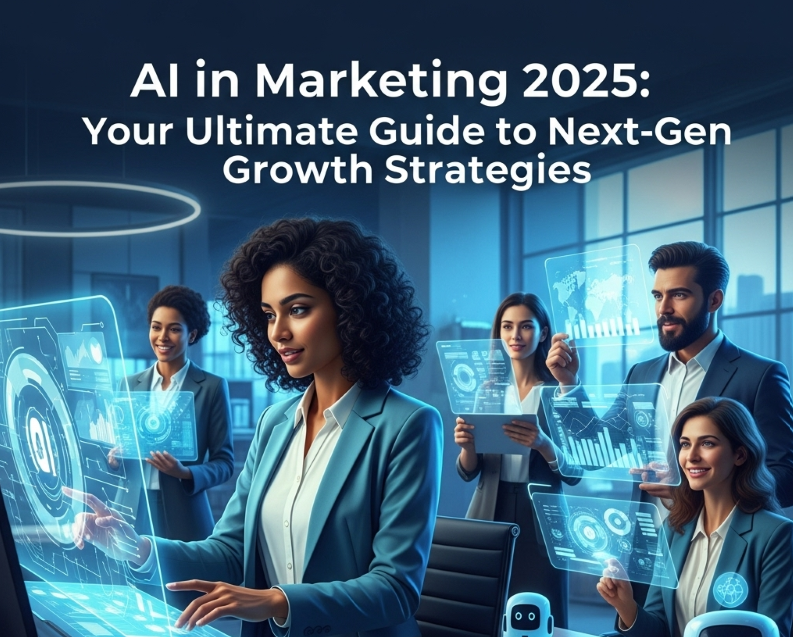
AI in Marketing 2025: Your Ultimate Guide to Next-Gen Growth Strategies
Hey there, fellow marketers and business owners!
Remember those early days of digital marketing? When SEO was about keyword stuffing and email campaigns were just about blasting out the same message to everyone on your list? It feels like a lifetime ago, doesn’t it? We’ve come so far, and the pace of change is only accelerating. Today, in 2025, we’re not just witnessing change; we’re in the midst of a full-blown revolution, and its name is AI.
I recall a conversation just a few years back with a veteran marketer, a true legend in the field. We were talking about the future, and he chuckled, “AI? That’s still sci-fi, kid. Give me a good old A/B test and some strong copy any day!” Well, I wonder what he’d say now. Because what was once “sci-fi” is now our everyday reality, transforming how we connect with customers, optimize campaigns, and drive growth. This isn’t just about efficiency anymore. It’s about understanding your customer on a profoundly deeper level, delivering experiences that feel tailor-made, and making decisions with a foresight we could only dream of before.
So, grab a cup of coffee, settle in, and let’s explore how AI is not just a tool, but the very engine of next-gen growth strategies in marketing for 2025 and beyond. This comprehensive guide will equip you with the knowledge to harness artificial intelligence for marketing success.
The Dawn of Hyper-Personalization: Beyond Traditional Segmentation
For years, personalization has been the holy grail of marketing. We’ve tried segmentation, personas, and dynamic content. But let’s be honest, it was often still a broad stroke. Now, with AI in marketing, we’re entering an era of hyper-personalization at scale.
Imagine this: Sarah logs onto your e-commerce site. Instead of seeing a generic “new arrivals” banner, AI instantly analyzes her past purchases, Browse history, recent searches (even across different platforms, thanks to sophisticated data integration), and even her current weather and local events. It then dynamically populates the homepage with products she’s highly likely to be interested in, complete with pricing adjusted for her loyalty tier, and even displays products in colors or styles she’s previously favored.
How AI Fuels Hyper-Personalization in 2025:
- Predictive Analytics on Steroids: AI marketing models are now incredibly adept at analyzing vast datasets of consumer behavior. They’re not just looking at what someone bought, but why they bought it, when they bought it, and what their next need might be. This allows for truly proactive marketing strategies. Think about how Netflix suggests your next binge-watch, but apply that same intelligence to every touchpoint in your customer journey.
- Real-time Optimization for Customer Experience: The beauty of AI is its ability to learn and adapt in real-time. If Sarah spends a few extra seconds on a particular product, the AI instantly adjusts other recommendations on the page. This dynamic responsiveness creates a seamless and intuitive experience for the customer, making them feel genuinely understood.
- Multichannel Cohesion with AI: AI is the glue that binds disparate marketing channels. Whether a customer interacts with your brand on social media, via email, on your website, or even through a chatbot, the AI ensures a consistent, personalized experience across all touchpoints. No more disjointed journeys!
Example in Action: A global travel agency uses AI to curate entire vacation packages. If a customer searches for “beach holidays,” the AI doesn’t just show flights and hotels. It considers their past travel history, preferred airlines, budget, travel companions, and even their social media activity to suggest specific destinations, activities, and local experiences that resonate with their individual preferences. This isn’t just selling a trip; it’s crafting a dream with AI-driven personalization.
Content Creation & Optimization: From Manual Labor to Marketing Magic with AI
“Content is King,” they said. And it still is! But the way we create and optimize it is undergoing a seismic shift. Generative AI for marketing content is no longer a novelty; it’s a powerful co-pilot for marketers in 2025.
Gone are the days of staring at a blank screen for hours, struggling with headlines. Now, AI can generate blog post ideas, draft entire articles (which, of course, we meticulously review and humanize!), write compelling ad copy, and even produce short-form video scripts.
How AI is Transforming Content Marketing:
- Ideation & Research for SEO: AI content tools can analyze trending topics, competitor content, and audience questions to suggest highly relevant and engaging content ideas. It’s like having a dedicated research team at your fingertips, identifying high-traffic content opportunities.
- First-Draft Generation & Efficiency: While AI won’t replace human creativity, it can significantly speed up the drafting process. Imagine needing a blog post on “sustainable living tips.” An AI can generate a comprehensive first draft in minutes, freeing you up to add your unique voice, insights, and storytelling.
- SEO Enhancement with AI: AI tools are incredibly adept at identifying optimal keywords, suggesting internal linking opportunities, and ensuring your content is structured for maximum search visibility. This means less guesswork and more targeted content that actually ranks, boosting your organic search engine performance.
- Dynamic Content Adaptation: Beyond initial creation, AI can dynamically adapt content for different audiences or platforms. A single piece of content can be automatically reformatted and tweaked for a LinkedIn post, an Instagram story, or an email snippet, maintaining consistency while maximizing impact across your digital marketing channels.
Example in Action: A small business specializing in handmade jewelry uses AI to generate unique product descriptions for each new item. The AI analyzes the materials, design, and target audience, then crafts engaging narratives that highlight the craftsmanship and emotional connection to the pieces, saving hours of manual writing. They also leverage AI to suggest optimal hashtags for their social media posts, increasing their reach and engagement.
The Predictive Power of AI: Knowing What’s Next for Your Business
This is where AI in marketing truly shines – its ability to forecast and anticipate. No longer are we just reacting to market shifts; we’re predicting them.
Think about the sheer volume of data available to marketers today: website analytics, social media trends, sales data, customer service interactions, external economic indicators. It’s overwhelming for a human to process. But for AI? It’s a goldmine for data-driven marketing decisions.
Key AI Applications in Predictive Marketing:
- Customer Lifetime Value (CLTV) Prediction: AI can accurately predict which customers are likely to become your most valuable, allowing you to tailor retention strategies and allocate resources more effectively for long-term growth.
- Accurate Sales Forecasting: Beyond just looking at past sales, AI can factor in seasonality, external events, marketing campaign performance, and even competitor activity to provide highly accurate sales forecasts. This is invaluable for inventory management and resource allocation within your sales and marketing strategy.
- Emerging Trend Identification: AI can spot emerging trends in consumer behavior, purchasing patterns, or even social sentiment before they become mainstream. This gives brands a crucial first-mover advantage in market analysis.
- Churn Prevention with AI: By identifying patterns in customer behavior that precede churn, AI can trigger proactive interventions, helping you retain valuable customers before they decide to leave. This is a critical component of customer retention strategies.
Example in Action: A subscription box service uses AI to predict which subscribers are at risk of canceling. The AI flags accounts based on reduced engagement, declining open rates, or changes in Browse patterns. The marketing team then sends personalized offers or surveys to these “at-risk” customers, often turning potential churn into renewed loyalty.
Optimizing Ad Campaigns with AI: Smarter Spending, Bigger Returns
Paid advertising can be a black hole for budgets if not managed precisely. AI is transforming ad optimization, ensuring every penny works harder and delivering higher marketing ROI.
Remember the days of manually adjusting bids and endlessly tweaking ad copy? While human oversight is still crucial, AI automates and optimizes much of this heavy lifting, allowing marketers to focus on strategy rather than repetitive tasks.
How AI Enhances Digital Advertising Performance:
- Dynamic Bidding & Budget Allocation: AI algorithms analyze real-time performance data to automatically adjust bids and allocate budgets across different campaigns and channels for maximum ROI. This is a game-changer for PPC campaign management.
- Advanced Audience Segmentation & Targeting: Forget broad demographic targeting. AI can create highly granular audience segments based on psychographics, behaviors, and even real-time intent signals, ensuring your ads reach the right person at the right time. This improves ad targeting precision.
- Creative Optimization with AI: AI can analyze which ad creatives (images, videos, copy) perform best for specific audiences and even generate variations to continuously improve performance. This leads to more effective ad creatives.
- Fraud Detection & Prevention: AI plays a crucial role in identifying and mitigating ad fraud, protecting your budget from invalid clicks and impressions, safeguarding your ad spend.
Example in Action: An e-commerce brand running Google Ads and Meta Ads campaigns uses an AI-powered platform. The AI constantly monitors performance, shifting budget between platforms and campaigns based on real-time ROI. If a particular product’s ad on Instagram starts performing exceptionally well, the AI automatically increases its budget. If a Google Search ad isn’t converting, it reduces spend and suggests alternative keywords or ad copy. This dynamic optimization leads to significantly lower cost-per-acquisition (CPA).
The Human-AI Partnership: The Future of Marketing Teams
Here’s the critical point: AI isn’t here to replace marketers. It’s here to empower us. The most successful marketing teams in 2025 aren’t those trying to out-AI the machines, but those who effectively integrate AI into their workflows, fostering a symbiotic relationship.
My own experience: I used to spend hours manually pulling data from different platforms, trying to stitch together a comprehensive picture. Now, an AI assistant does that in seconds, presenting me with clear, actionable insights. This frees up my time to focus on what truly matters: strategic thinking, creative brainstorming, and building genuine human connections with our audience.
Building an Effective Human-AI Marketing Team:
- Upskill Your Team: Invest in training for your marketing team to understand AI tools and how to leverage them effectively. The marketer of tomorrow is an AI-powered marketer.
- Focus on Creativity & Strategy: Let AI handle the repetitive, data-intensive tasks. This allows your human team to dedicate their energy to high-level strategy, innovative campaign ideas, and cultivating brand voice and storytelling.
- Ethical Considerations in AI Marketing: As AI becomes more prevalent, ethical considerations around data privacy, algorithmic bias, and transparency are paramount. Marketers must champion responsible AI usage to build and maintain trust with consumers.
- The “Why” vs. The “How”: AI excels at the “how” – how to optimize a campaign, how to personalize a message. Humans excel at the “why” – why this message, why this audience, why this brand story. This balance is key for holistic marketing strategies.
Navigating the Challenges of AI Integration: Trust, Transparency, and Talent
While the benefits of AI in marketing are immense, it’s crucial to acknowledge the hurdles.
- Data Privacy and Trust: With hyper-personalization comes increased responsibility. Consumers are more aware of their data than ever. Brands must be transparent about how data is used and ensure robust privacy measures are in place. Building trust in an AI-driven world is paramount.
- Algorithmic Bias: AI models learn from the data they’re fed. If that data contains biases, the AI will perpetuate them. Marketers need to be vigilant in auditing their AI systems to ensure fair and equitable treatment of all customer segments.
- The Talent Gap in AI Marketing: The rapid evolution of AI means there’s a growing need for marketers who understand how to work with these new technologies. Investing in continuous learning and development is no longer optional; it’s essential for career growth in marketing.
- Keeping it Human: The danger with too much automation is losing the human touch. While efficiency is great, genuine connection, empathy, and creative flair are still the hallmarks of great marketing. The challenge is to use AI to amplify these human qualities, not diminish them.
What Does This Mean for YOU in 2025? Practical Steps for AI Adoption
If you’re still on the fence about AI in marketing, 2025 is the year to jump in. This isn’t a fleeting trend; it’s the new operating system for marketing.
- Start Small: You don’t need to overhaul your entire marketing department overnight. Begin with one area, perhaps content generation or ad optimization, and experiment with AI tools.
- Educate Yourself and Your Team: Resources are abundant. Online courses, webinars, industry reports – immerse yourself in the world of AI marketing technologies.
- Embrace the Data: AI thrives on data. Ensure your data collection is robust, ethical, and well-organized. This is foundational for any AI-powered marketing initiative.
- Prioritize the Customer: AI’s greatest power is in its ability to enhance the customer experience. Always keep your customer at the center of your AI strategy.
The Road Ahead: An Exciting Journey with AI in Marketing
The journey of AI in marketing is just beginning. What we see in 2025 is merely a glimpse of what’s to come. Imagine fully autonomous AI agents handling end-to-end campaign operations, from ideation to execution and real-time optimization. Picture immersive experiences powered by AI-driven augmented and virtual reality, allowing customers to interact with products in ways previously unimaginable.
It’s an exciting, dynamic, and sometimes daunting landscape. But for those of us willing to learn, adapt, and embrace this technological leap, the opportunities for unprecedented growth are truly limitless.